

Designed for Efficiency, Built for Long-Term Sustainability
A Holistic Approach
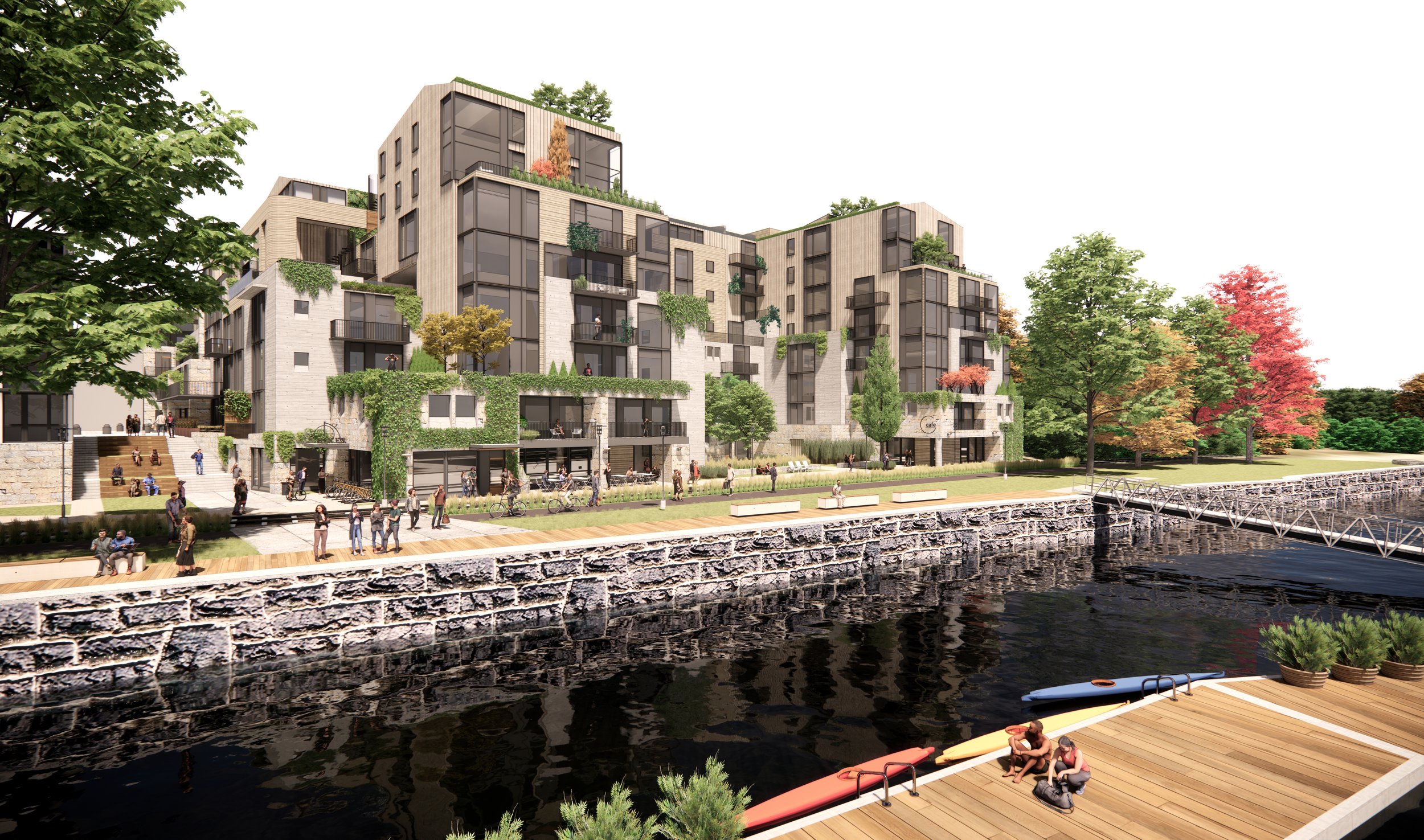
Portland Foreside is being developed with a long-term view of how cities should function. Sustainability is not a single feature or system. It is the result of coordinated decisions across design, construction, infrastructure, and daily operations.
The built environment — how we construct and operate buildings — represents a significant share of global carbon emissions. That reality creates both responsibility and opportunity. Thoughtful urban development can reduce energy waste, encourage walkability, and support more efficient use of infrastructure.
Our goal is to build a district that performs well environmentally while contributing positively to Portland’s urban fabric.
Urban Infill & Walkability
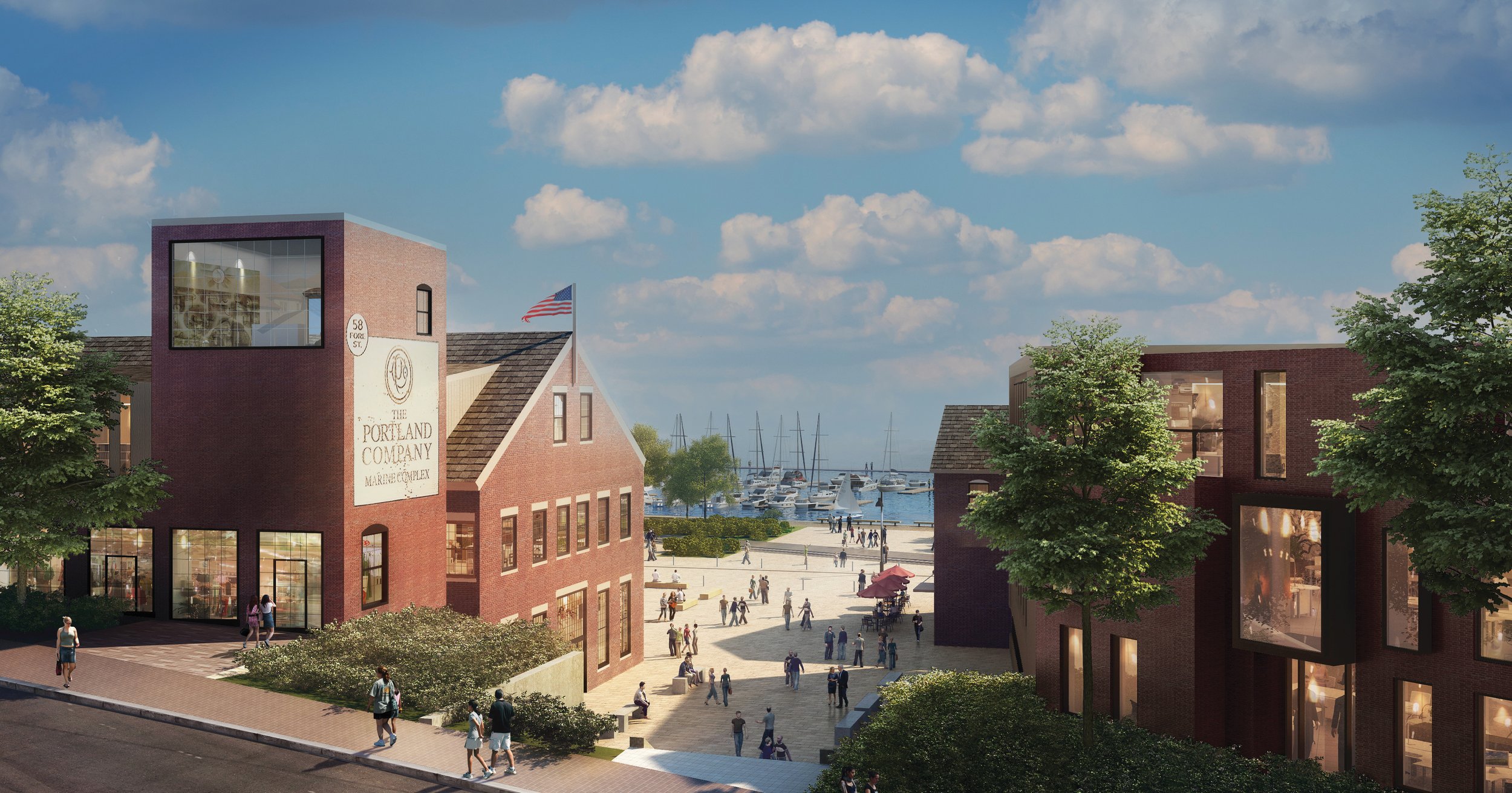
Portland Foreside is a mixed use waterfront district designed around proximity. Housing, hospitality, retail, offices, and public spaces are integrated within a walkable campus connected to existing neighborhoods.
Dense, mixed use infill development supports:
Reduced reliance on single occupancy vehicle trips
Increased pedestrian activity
Better utilization of existing city infrastructure
Activation of previously underutilized waterfront property
By concentrating activity in a walkable district, urban infill can meaningfully reduce transportation related energy use while strengthening community connections.
High Performance Buildings
Each building at Portland Foreside is designed with long-term performance in mind.
High efficiency building envelopes, advanced mechanical systems, and energy modeling are incorporated throughout the campus.
Commercial Property Assessed Clean Energy financing, known as CPACE, is being utilized to support investments in long term efficiency. This financing structure aligns capital decisions with environmental performance over time.
Durability and operational efficiency are core considerations from the outset of design.

Integrated Energy Systems
In addition to building level efficiency, Portland Foreside is implementing a district energy strategy designed to improve overall system performance.
The combined heat and power system serving the campus generates electricity while capturing thermal energy that would otherwise be lost. That recovered heat supports building heating, hot water, and seasonal snowmelt.
By integrating electric and thermal production, the system improves overall fuel efficiency compared to conventional approaches where electricity and heating are produced separately.
The system is privately financed and serves only affiliated buildings within the campus. It is fully permitted by the Maine Department of Environmental Protection and operates in compliance with applicable environmental standards.
Waterfront Stewardship & Snowmelt
Given the project’s location along Casco Bay, site management and runoff are critical considerations.
The district snowmelt system utilizes recovered thermal energy to reduce reliance on salt and chemical deicing in pedestrian areas. Minimizing salt use helps reduce runoff impacts and supports long-term waterfront stewardship.
Resilience and environmental responsibility are integrated into the design of both buildings and public spaces.
Responsible Infrastructure Planning
Electrification and grid decarbonization are important components of long term climate progress. At the same time, large scale urban districts must thoughtfully plan how energy is produced and used.
At Portland Foreside, building efficiency, district energy integration, and infrastructure planning work together. Sustainability is not treated as a single initiative, but as an ongoing design principle shaping how the campus evolves over time.